

Before We Begin
Nothing in the Brit Chadashah is new. Every concept, every promise, every pattern that Yeshua and the apostles invoke was already living in the Tanakh centuries before a single Greek sentence was written. The Tanakh speaks first. Always. The question I bring to every text is the same: what did this word mean in its original language, to its original audience, in its original context? If you start there, Scripture will not let you down. If you skip it, you will spend your whole life reading someone else’s interpretation and calling it the Word of God.
The Anchor
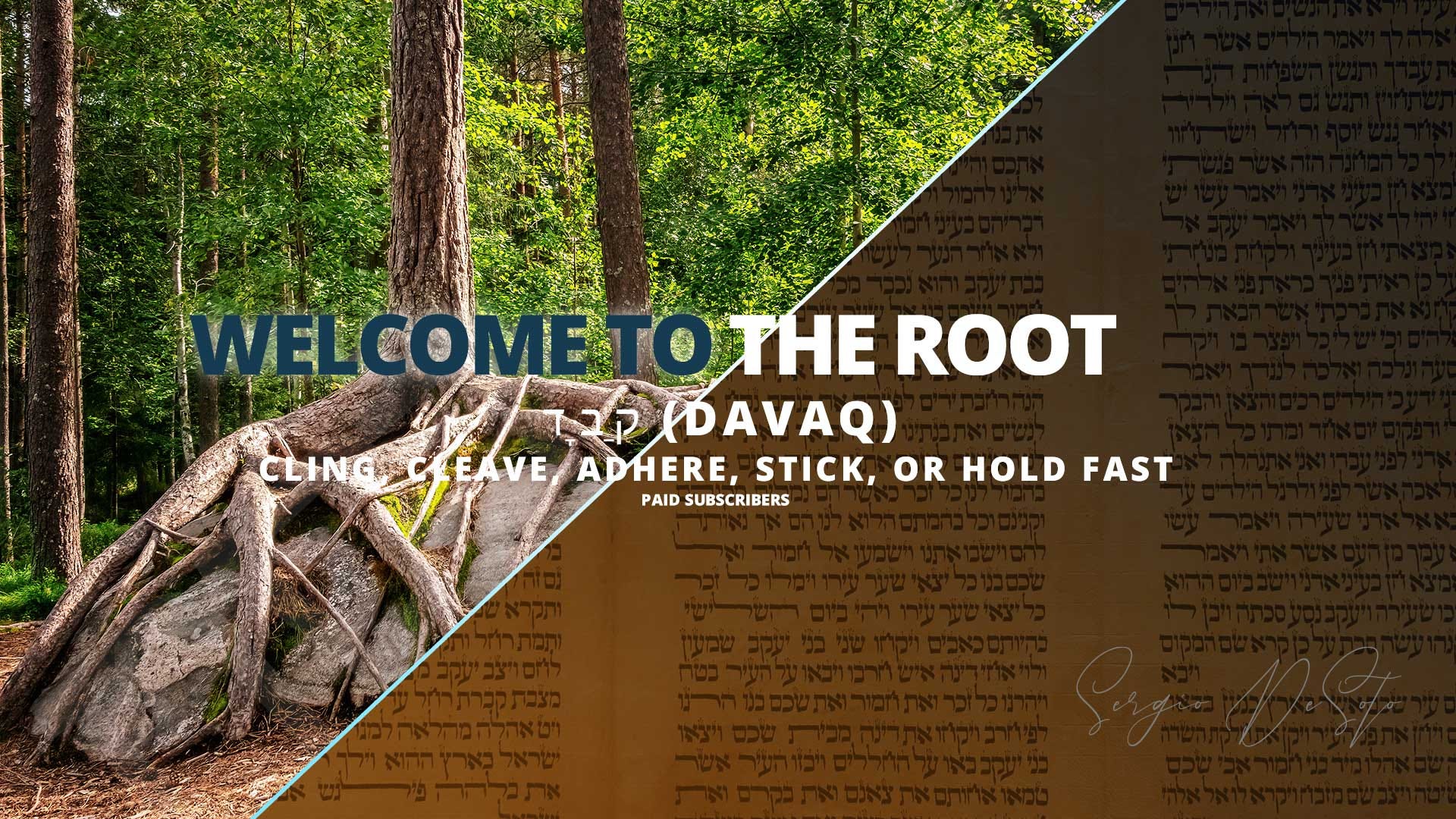
דָּבַק (davaq) — to cling, to cleave, to press into, to bond.
This verb appears approximately 55 times in the Tanakh. It is the word used when a man leaves his father and mother and bonds to his wife (Genesis 2:24). It is the word used when HaShem commands Israel to cling to Him (Deuteronomy 10:20). It is the word used when Ruth refused to leave Naomi (Ruth 1:14). And it is the word used when leprosy attaches to Gehazi’s skin and will not come off (2 Kings 5:27).
